Acid reflux & heartburn after coffee
Why your morning cup leaves a burn behind your breastbone — the three reasons coffee sets off reflux, and the practical changes that let most people keep drinking it with far less heartburn.
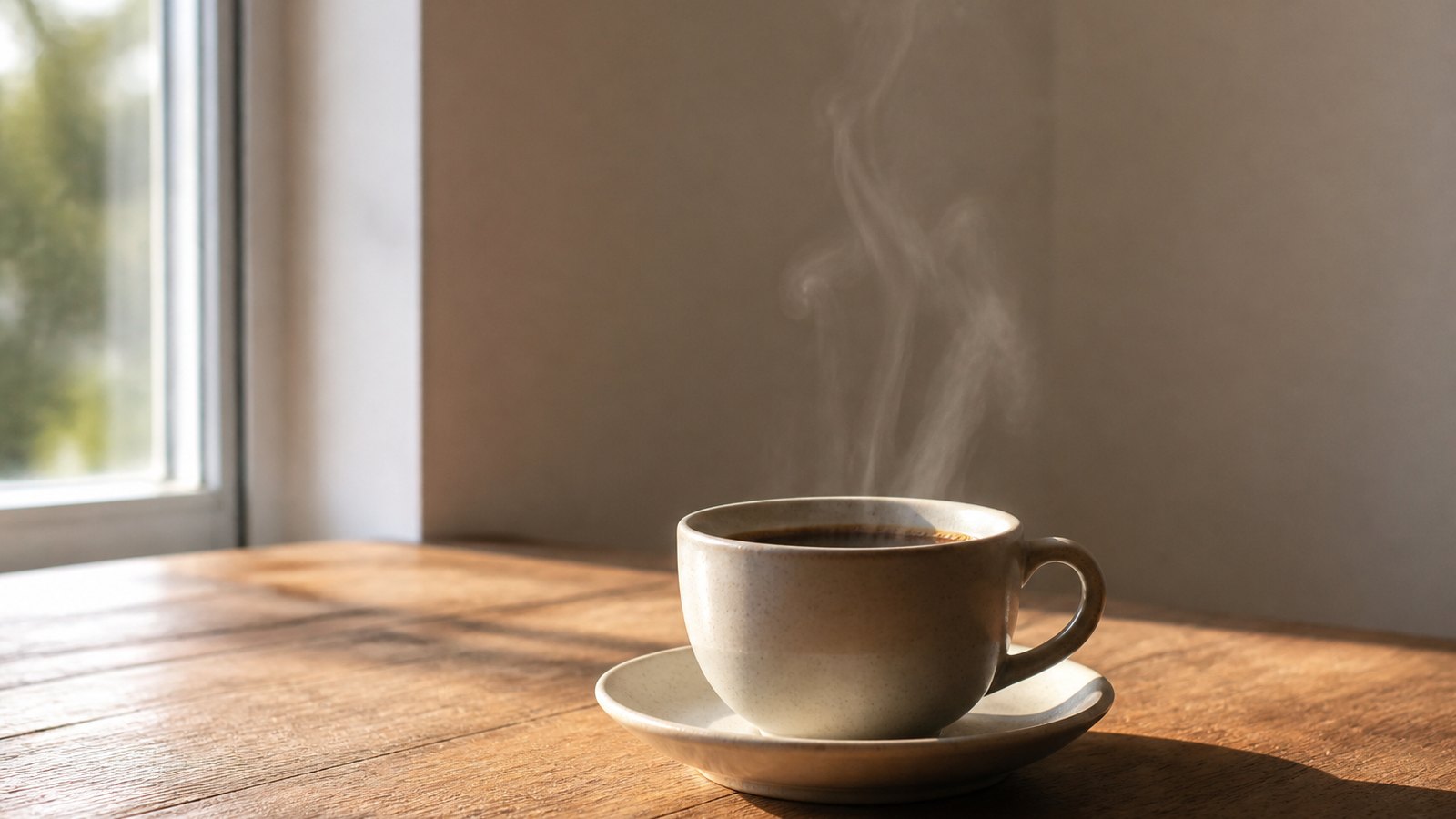
For a lot of people, coffee is the single most reliable heartburn trigger — but it doesn't have to mean giving it up.
If a cup of coffee is reliably followed by a warm, sour burn rising behind your breastbone, you're not imagining it. Coffee is one of the foods most often named in reflux research and in people's own symptom diaries. The good news is that for most people the answer isn't "quit coffee forever" — it's understanding why it does this and making a few targeted changes. Here's what's actually happening, and what to do about it.
Why coffee triggers reflux
Acid reflux happens when stomach contents push back up past the lower esophageal sphincter (LES), the muscular valve at the top of the stomach. Coffee leans on this in three separate ways at once, which is why it's such a common culprit.
- It relaxes the valve. Caffeine — and other compounds in coffee — can loosen the LES, making it easier for acid to slip upward into the esophagus.
- It stimulates stomach acid. Coffee prompts the stomach to produce more acid, so there's simply more of it available to reflux.
- It's often drunk in a way that makes things worse. Many people have it first thing on an empty stomach, in large mugs, very hot, and in a hurry — each of which raises the odds of a flare.
What about decaf?
Decaf is usually gentler. Taking out most of the caffeine reduces both the valve-relaxing effect and the acid stimulation, so a lot of people who flare on regular coffee do better on decaf. But "gentler" isn't the same as "trigger-free" — coffee still contains other compounds that can relax the LES somewhat and irritate a sensitive gut, so decaf bothers some people too. It's a sensible thing to try, not a guaranteed fix.
Coffee & reflux at a glance
- Main reason
- Relaxes the lower esophageal sphincter (LES)
- Also
- Stimulates stomach acid
- Gentler options
- Decaf, cold brew, low-acid roast, smaller cups
- Best test
- Track your own symptoms
Practical fixes: how to keep drinking coffee
You can usually cut the heartburn without cutting the coffee. Try these in roughly this order and keep the ones that help:
- Don't drink it on an empty stomach. Have coffee with or after food — a buffer in the stomach blunts the acid hit.
- Use smaller cups. A modest cup refluxes far less than a large mug; volume matters.
- Try a lower-acid coffee. Darker roasts, cold brew and coffees labelled "low-acid" are typically less acidic than a light-roast hot drip.
- Switch to decaf, or blend half-decaf, to cut the caffeine load while keeping the ritual.
- Avoid late-day coffee. Reflux is worse lying down, so an afternoon or evening cup is more likely to bother you overnight.
- Don't lie down after. Stay upright for a while after drinking and let gravity keep acid where it belongs.
The simplest change is also the most underrated: stop drinking coffee on an empty stomach. A little food first gives the acid something to work on and often takes the edge off the burn on its own.
Is it the coffee, or is it you?
Here's the part most articles skip. Coffee is a common trigger, not a universal one. Plenty of people with reflux drink it daily with no trouble, while others react to one sip. Portion size, timing, what else you ate, the roast and even your stress level all change the outcome. So the honest answer to "does coffee cause my reflux?" is: maybe — and the only way to know how much it affects you is to track it. Log your coffee and your symptoms for a couple of weeks and look for whether the burn repeatedly follows the cup. That turns a guess into an answer.
The bottom line
Coffee earns its reputation: it relaxes the valve, stimulates acid, and is usually drunk in the worst possible way for reflux. But you rarely have to give it up outright. Eat first, keep the cup small, lean toward decaf or a low-acid brew, skip the late ones, and stay upright afterward — then confirm what works by tracking your own symptoms. For the wider picture, see the full list of reflux trigger foods or the exact two-week method in how to find your personal reflux triggers.
FAQ
Does coffee cause acid reflux?+
It can. Coffee relaxes the lower esophageal sphincter — the valve that keeps acid in the stomach — and stimulates acid production, which makes it one of the most common heartburn triggers. But it doesn't affect everyone, and how much it bothers you depends on the person, the portion and when you drink it.
Is decaf better for acid reflux?+
Usually, yes. Removing most of the caffeine reduces both the valve-relaxing effect and the acid stimulation, so many people tolerate decaf better. It isn't always trigger-free, though — coffee contains other compounds that can still loosen the valve and irritate a sensitive gut, so it's worth testing on yourself.
What coffee is least likely to cause heartburn?+
Lower-acidity options tend to be gentler: darker roasts, cold brew and coffees labelled low-acid. Smaller cups, drinking it with or after food rather than on an empty stomach, and avoiding very hot or very late-day coffee all help too. The only way to know what works for you is to track it.