What foods trigger acid reflux?
A practical run-through of the foods and drinks most likely to cause heartburn, why each one does it — and how to work out which actually affect you instead of cutting out everything you enjoy.
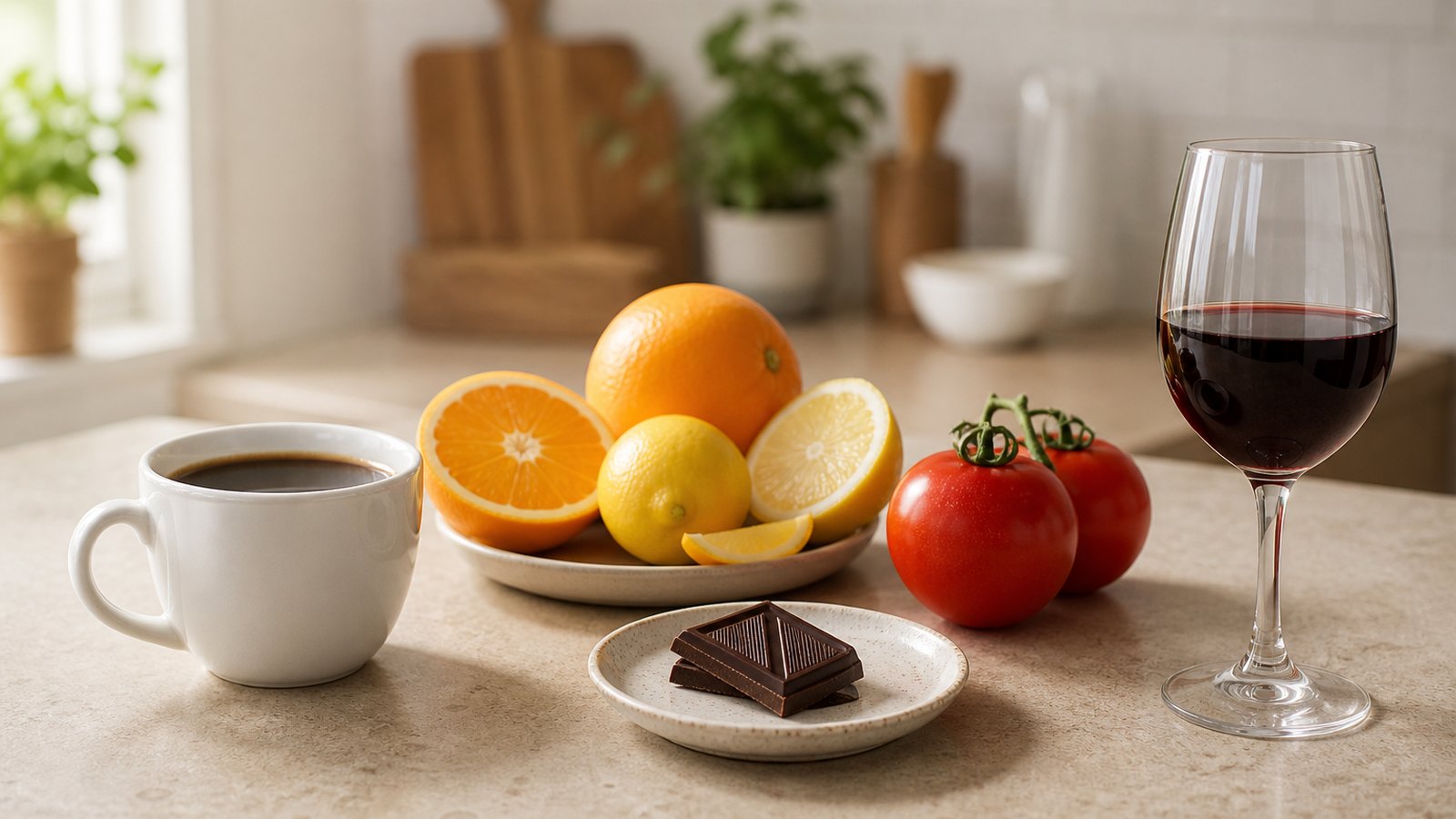
The usual suspects — but the real list is the one that's true for your own gut.
If you've searched for reflux trigger foods, you've probably seen the same scary list a dozen times: give up coffee, citrus, tomatoes, chocolate, anything fried, anything spicy, alcohol… until it feels like there's nothing left to eat. The truth is kinder. These foods are common triggers, not universal ones, and most people only react to a handful of them. The goal isn't to ban the whole list — it's to find your short list and leave the rest on your plate.
Why certain foods cause reflux
Acid reflux happens when stomach contents push back up past the lower esophageal sphincter (LES), the muscular valve at the top of the stomach. Foods trigger it through a few simple mechanisms:
- They relax the valve. Fat, chocolate, peppermint, caffeine and alcohol can all loosen the LES, making it easier for acid to escape upward.
- They slow stomach emptying. Fatty and fried meals sit longer, raising pressure and the chance of reflux.
- They are acidic or irritating. Citrus, tomato and spicy food can irritate an already-inflamed esophagus, even when they aren't the root cause.
- They produce gas or volume. Carbonated drinks and very large portions stretch the stomach and push acid up.
The usual suspects
Here are the foods and drinks that show up most often in reflux research and in people's own diaries, and why each one earns its place.
| Trigger | Why it can cause reflux |
|---|---|
| Coffee & caffeine | Relaxes the LES and stimulates acid; one of the most common single triggers. |
| Fatty & fried food | Slows stomach emptying and loosens the valve — often the biggest offender. |
| Spicy food | Capsaicin can irritate the esophagus and slow digestion. |
| Citrus & tomato | Highly acidic; irritating to an inflamed esophagus. |
| Chocolate | Contains caffeine and compounds that relax the LES. |
| Alcohol | Relaxes the valve and increases acid; red wine and spirits are frequent culprits. |
| Carbonated drinks | Gas distends the stomach and pushes acid upward. |
| Peppermint | Counter-intuitively relaxes the LES despite feeling soothing. |
| Onions & garlic | Raw especially; common in people with sensitive guts. |
| Large, late meals | Not a food, but the single most reliable trigger — volume plus lying down. |
The most underrated trigger isn't a food at all — it's a big meal eaten late, then going to bed. Even "safe" food refluxes when there's too much of it and gravity stops helping.
The catch: your list isn't the list
Here's the part most articles skip. Two people with reflux can have completely different triggers. You might drink coffee with no trouble but flare badly after a tomato-heavy pasta; your friend is the opposite. Portion size, the time of day, stress, what else was on the plate and how fast you ate all change the outcome. That's why blanket elimination is both miserable and unreliable — you end up avoiding foods that were never a problem while missing the one that is.
How to find your real triggers
The only dependable method is to track what you eat and how you feel, then look for the foods that repeatedly show up before symptoms. Do it by hand and the pattern is easy to miss across busy weeks. This is exactly the job a symptom-and-trigger diary app is built for: you log meals and symptoms, and it does the correlation for you, ranking your most likely triggers from your own data.
Beyond food: habits that help
- Eat earlier. Leave 3 hours between your last meal and lying down.
- Smaller portions. Two modest meals beat one large one for reflux.
- Raise the head of the bed. A wedge or risers let gravity work overnight.
- Don't write off weight, smoking and tight waistbands — all raise abdominal pressure.
The bottom line
Treat the famous trigger list as a menu of suspects, not a sentence. Start by watching the big ones — fatty meals, coffee, alcohol, late dinners — but confirm with your own tracking before you give anything up for good. Next, see the exact two-week method in how to find your personal reflux triggers, or browse the 10 best reflux & gut tracker apps of 2026.
FAQ
What is the number-one food that causes acid reflux?+
There's no single worst food for everyone, but high-fat and fried foods are the most common offenders because fat slows stomach emptying and relaxes the valve at the top of the stomach. Coffee, alcohol, chocolate, citrus, tomato and spicy food round out the usual list.
Are trigger foods the same for everyone?+
No. The classic list is a starting point, not a verdict. Many people tolerate foods that bother others, and portion size, timing and what else you ate matter as much as the food itself. The only reliable way to know yours is to track your own symptoms.
How long after eating does reflux start?+
Often within 30 minutes to a couple of hours, but it can be delayed — especially after a large, late meal followed by lying down. Because of that lag, recording the time of meals and symptoms helps reveal links you'd otherwise miss.