The GERD diet: what to eat and what to avoid
There's no single reflux diet that works for everyone. The reliable approach is simpler: lean on lower-risk foods, fix the portion and timing habits that matter just as much, and then confirm your own triggers rather than cutting everything.
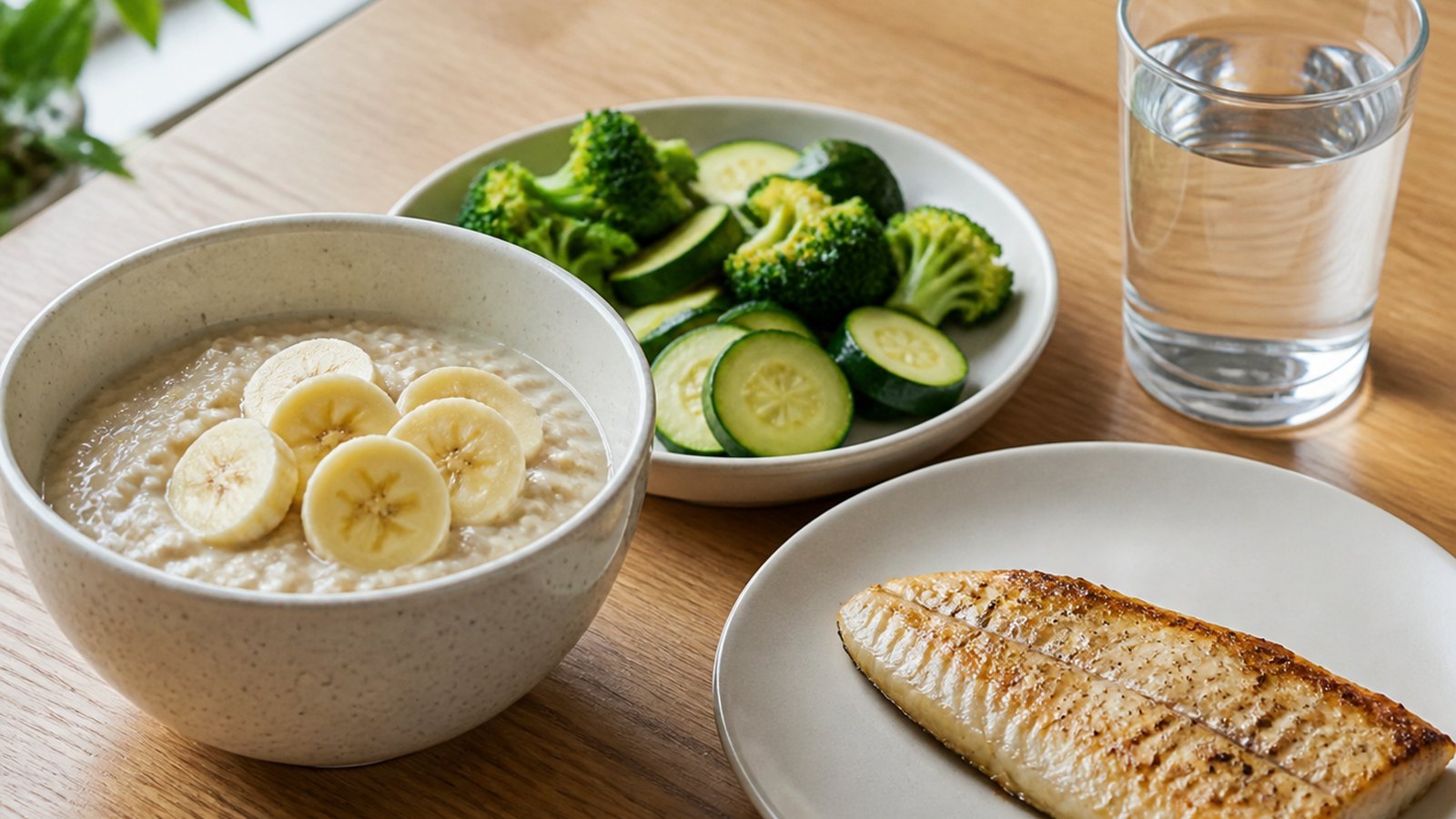
A reflux-friendly day isn't bland — it's built around gentle staples and sensible portions.
Search for a "GERD diet" and you'll find strict lists that read like a ban on everything enjoyable. It's worth saying plainly: there is no one universal GERD diet. What sets off reflux varies a lot from person to person, and the same meal can be fine in a small portion at lunch yet miserable in a large one late at night. A workable plan rests on three things — choosing foods that tend to be gentler, changing how you eat, and confirming which foods actually affect you so you only give up what you must.
Foods that tend to soothe — and foods that commonly aggravate
Think of these as tendencies, not rules. Most people react to only a handful of items on the right-hand column, and a few tolerate things that bother others. Use the table as a starting map, not a verdict.
| Lower-risk & soothing | Commonly aggravating |
|---|---|
| Oatmeal & whole grains | Fried & fatty food |
| Non-citrus fruit (banana, melon) | Coffee & strong tea |
| Most vegetables | Alcohol |
| Lean protein — chicken, fish | Chocolate |
| Ginger | Citrus & tomato |
| Lean dairy or plant alternatives | Spicy food |
| Healthy fats in moderation | Peppermint |
| Plain water, non-mint herbal teas | Carbonated drinks |
| Modest, slow-eaten portions | Raw onion & garlic |
The pattern behind the right-hand column is consistent: fat and large volumes slow stomach emptying and relax the valve at the top of the stomach; coffee, alcohol, chocolate and peppermint loosen that valve too; and acidic or spicy foods can irritate an already-sensitive esophagus. The left-hand column avoids those mechanisms — which is why it's a sensible default, not a magic cure.
It's not just what — it's how
For a lot of people, meal habits move symptoms more than swapping one food for another. None of these require a special diet; they're free and they compound.
- Eat smaller meals. Two or three modest meals stretch the stomach less than one big one.
- Eat earlier. Leave about 3 hours between your last meal and lying down so the stomach can empty.
- Slow down. Eating fast means more air and more volume at once; give a meal time.
- Stay upright after eating. Gravity is on your side when you're sitting or walking, not reclining.
- Mind portion size. Even a "safe" food can reflux when there's simply too much of it.
- Raise the head of the bed. A wedge or risers help if night-time symptoms are an issue.
Two people can eat the exact same plate and only one refluxes — the difference is often portion size, timing and pace, not the recipe. Fix the habits first; they're the cheapest win.
Build it around your own triggers
The avoid-list above is a starting point, not a life sentence. The dependable move is to track what you eat and how you feel, find the foods that repeatedly precede symptoms, and then liberalise everything that doesn't. That way you cut three or four real culprits instead of needlessly giving up coffee, citrus and chocolate all at once when maybe only one of them is the problem. For the foods most worth watching first, see the complete reflux trigger-food list, and for the two-week method to pin down yours, read how to find your personal reflux triggers.
A reflux-friendly day, in practice
An ordinary, non-bland example — adjust to your own confirmed triggers.
What about FODMAPs?
If your symptoms overlap with IBS — bloating, gas, cramping, irregular bowel habits as well as reflux — a structured low-FODMAP approach may help, ideally guided by a dietitian so it stays balanced and you reintroduce foods properly. It's a more involved, temporary elimination than a general reflux diet, and apps like Monash University's exist to make the food categories easier to follow. It's not a first step for reflux alone, but worth raising with a clinician if the gut picture is mixed.
The bottom line
There's no single GERD diet to memorise. Favour gentler staples — whole grains, non-citrus fruit, vegetables, lean protein — go easy on the usual aggravators, and treat smaller, earlier, slower meals as the half of the equation most people underrate. Then let your own tracking decide the rest, so the only foods you give up are the ones that have earned it. Start with the trigger-food list or browse the best reflux & gut tracker apps of 2026.
FAQ
What can I eat for breakfast with acid reflux?+
Lower-risk breakfasts tend to be oatmeal or whole-grain cereal with a non-citrus fruit like banana or melon, eggs that aren't fried, or yogurt if dairy agrees with you. The bigger levers are a modest portion and not rushing — large, fast meals reflux more easily whatever the food. If coffee is a trigger, try a smaller cup with food or move it later.
Is milk good for heartburn?+
It's mixed. A cold glass can briefly buffer acid and feel soothing, but full-fat milk is high in fat, which can relax the valve at the top of the stomach and make reflux worse later. If milk helps you, low-fat or a plant alternative is usually safer than whole milk — and it isn't a treatment for ongoing GERD.
What drinks are best for reflux?+
Plain water is the safest default. Non-mint herbal teas such as chamomile or ginger suit many people. The ones worth limiting are coffee and strong tea, alcohol, and carbonated drinks — all common triggers. Tolerance varies, so confirm with your own tracking.